
Spray-applied cover for exposed batters, slopes and stockpiles, and surface binding to keep dust down on worksites. For civil contractors, builders and landholders across Townsville and North Queensland.
Protecting exposed ground
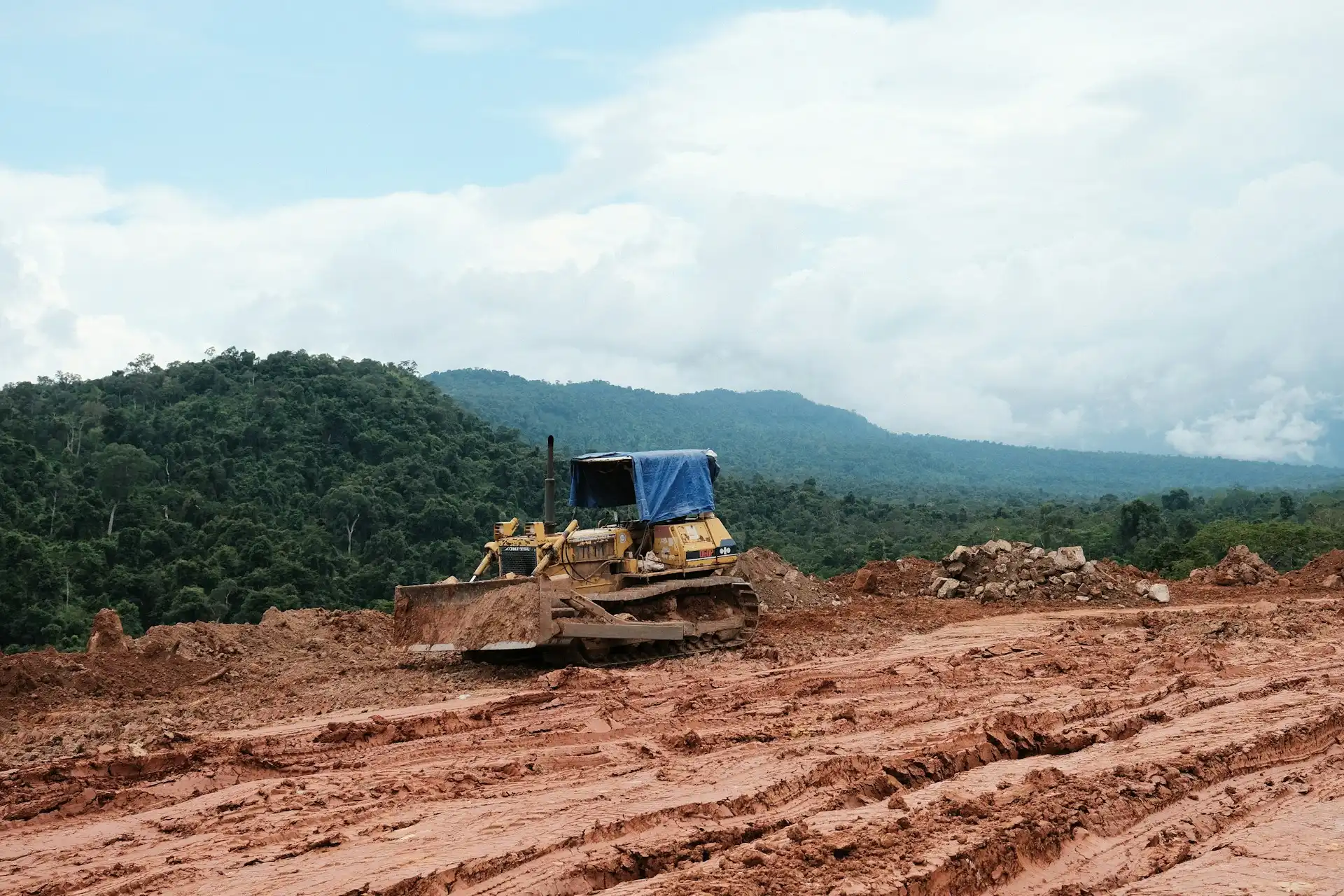
Once vegetation is stripped, bare soil is easily carried off by rain and wind. That can mean washed-out batters, silt in drains and stormwater, and dust drifting onto neighbouring properties and roads.
A spray-applied fibre cover or binding agent holds the surface together between stages of work, or until vegetation takes over. Treatments are matched to the soil, the slope, how exposed the area is and how long it needs to last.
01
Spray-on fibre cover for exposed slopes, embankments, stockpiles and cut-and-fill batters. The cover protects the surface from raindrop impact and runoff, helping to keep soil in place and out of drains and waterways.
It can be applied with seed so vegetation establishes through it, or without seed as temporary protection. Treatments are chosen to suit the soil, slope and exposure, including jobs ahead of the North Queensland wet season.
Commonly used for

02
Suitable tackifiers or polymers are applied to bind loose surface material on exposed soil, stockpiles and inactive sections of worksites. The treated surface forms a crust that is far less likely to lift in the wind.
It is useful where a site will sit untouched for a while, or where dust is a problem for neighbours, roads or other trades working nearby.
Commonly used for

North Queensland wet season
Heavy rain on exposed batters, stockpiles and new house blocks can strip topsoil, clog drains and undo weeks of work. Getting the ground seeded or covered before the wet gives it a chance to hold together. The lead-up to the wet is a busy time, so it pays to talk to Darren early.
Choosing a treatment
There is no one product for every site. These are the things Darren looks at before recommending a cover or binder.
Sandy, clay and dispersive soils behave differently and hold a cover in different ways.
Steeper and longer batters need a cover that stays put under heavier runoff.
How much rain and wind the area will face, and whether the wet season is close.
A short pause between stages needs a different approach to long-term revegetation.
Enquiry only
These require an individual site and product assessment before quoting. Send through your project specs and Darren will let you know what can be done.
Specialist products and treatments can be discussed and quoted after an individual site and product assessment.
Related services
Seeding and mulching backfilled trenches and disturbed ground once works are finished.
Pasture, grass or specified native blends to restore long-term ground cover.
Confirm where underground services sit before earthworks begin.
FAQ
Common questions about protecting exposed ground on worksites and rural land.
Erosion control protects soil from being washed or blown away, usually with a spray-applied fibre cover that may include seed. Dust suppression binds the loose surface with a tackifier or polymer so fine material does not lift into the air. Some sites need both.
It depends on the product, the soil, the slope and the weather. Some covers are designed for a short period between stages of work, while others support vegetation for long-term protection. Darren will explain what to expect for your site.
Yes, and it is one of the best times to do it. Covering exposed batters, stockpiles and new blocks before heavy rain gives them a better chance of holding together. Talk to Darren early, as the lead-up to the wet is busy.
Yes. Erosion control, dust suppression and reinstatement seeding can be booked by civil contractors, builders and developers, as well as by landholders and homeowners with bare or disturbed ground.
Bonded Fibre Matrix, Flexible Growth Medium, organic soil blankets, project-specified polymers and flocculants are enquiry-only. They can be discussed and quoted after an individual site and product assessment.